Every year, Canadians celebrate National Health and Fitness Day on the first Saturday of June, promoting active living and encouraging individuals to make physical activity part of their daily routines. While often viewed as a public health initiative, this national observance also provides an important opportunity to highlight the connection between physical fitness and workplace safety.
At Safety Path Advisory, we believe that workplace safety extends beyond policies, procedures, and protective equipment. It includes the physical well-being of workers. When employees move well, stay hydrated, and effectively manage fatigue, they are better equipped to perform their jobs safely and efficiently.
The Link Between Fitness and Workplace Safety
A healthy workforce is often a safer workforce. Workers who engage in regular physical activity are generally less likely to experience musculoskeletal injuries, fatigue-related incidents, and physical strain. Improved fitness can enhance balance, coordination, endurance, and mental alertness—factors that directly contribute to safer work practices.
Research consistently demonstrates that active employees experience lower injury rates, reduced absenteeism, improved productivity, and higher morale. These benefits not only support worker well-being but also strengthen organizational performance and safety culture.
For employers, National Health and Fitness Day serves as a reminder that health promotion and workplace safety should not be treated as separate initiatives. Instead, they should work together as part of a comprehensive approach to worker protection.
Turning a Health Awareness Day into a Safety Opportunity
National health observances provide valuable opportunities to reinforce workplace safety messages. Rather than focusing solely on compliance requirements, organizations can use these occasions to engage workers in practical discussions about their health and its impact on workplace performance.
Simple actions can make a meaningful difference:
- Encouraging brief pre-shift stretching routines.
- Promoting regular hydration throughout the workday.
- Scheduling short movement breaks during prolonged tasks.
- Identifying and addressing signs of fatigue before they lead to incidents.
- Supporting active living both inside and outside the workplace.
Over time, these habits can help reduce musculoskeletal disorders, slips, trips, falls, and mistakes associated with fatigue or overexertion.
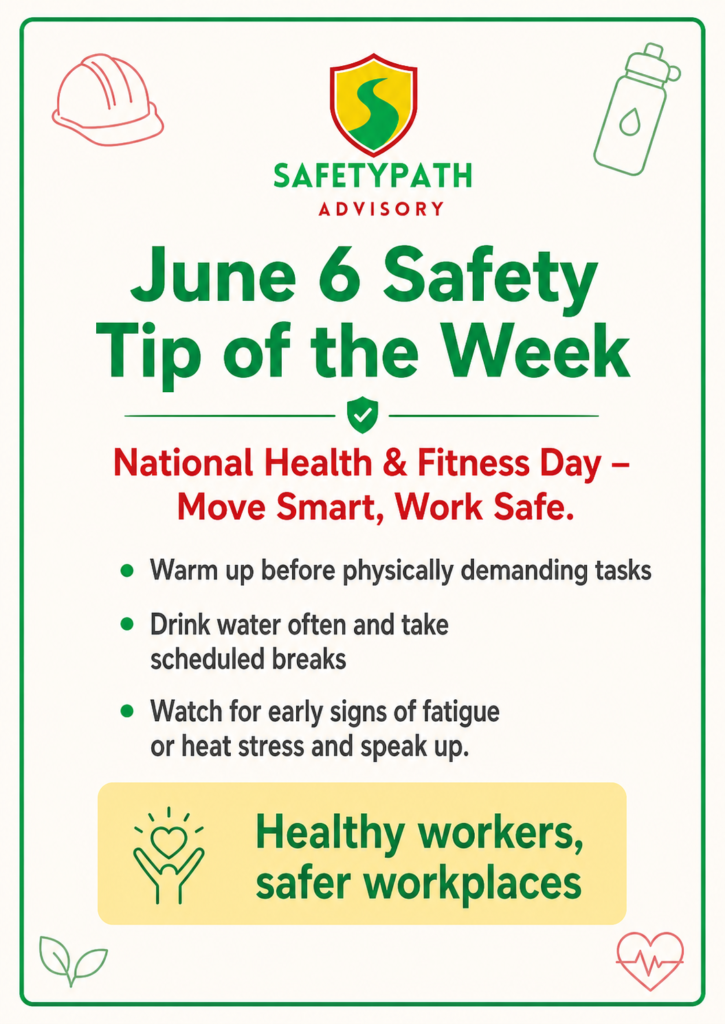
Safety Tip of the Week: Move Smart, Work Safe
In recognition of National Health and Fitness Day, Safety Path Advisory encourages organizations to share the following message with workers:
Move Smart, Work Safe
Prepare your body as carefully as you prepare your tools and equipment. Before beginning physically demanding tasks, take time to warm up and stretch the muscle groups you will use throughout your shift. Drink water regularly, especially when working in warm environments, and pace your workload to avoid sudden overexertion.
Be alert to early signs of fatigue or heat stress, including headaches, dizziness, excessive sweating, reduced concentration, or unusual irritability. If you notice these symptoms in yourself or a co-worker, report them immediately and take appropriate corrective action.
Remember: your health is an essential part of your safety system.
Practical Actions for Employers and Supervisors
Organizations do not need elaborate wellness programs or fitness facilities to promote healthier movement at work. Small, consistent actions can have a significant impact on worker health and safety.
Safety Path Advisory recommends that employers and supervisors:
Encourage Daily Movement
Incorporate opportunities for safe physical activity throughout the workday. Create GEMBA (Walking meetings), safe stair use, and short movement breaks can help reduce the risks associated with prolonged sitting or repetitive tasks.
Implement Pre-Shift Warm-Ups
Start each shift with a structured warm-up routine that targets the primary muscle groups used during work activities. This can help prepare workers physically and reduce the risk of strains and sprains.
Promote Hydration
Ensure workers have easy access to drinking water and encourage regular hydration breaks, particularly during hot weather or physically demanding work.
Address Fatigue Proactively
Use toolbox talks, safety meetings, and daily huddles to discuss fatigue awareness and heat stress prevention. Encourage workers to report symptoms early without fear of stigma.
Integrate Health into Safety Programs
Include physical wellness objectives within broader safety initiatives. Combining worker education, leadership support, and employee participation helps create sustainable improvements in both health and safety outcomes.
Healthy Workers, Safer Workplaces
At Safety Path Advisory, we believe that investing in worker health is an investment in workplace safety. National Health and Fitness Day provides organizations with an ideal opportunity to reflect on how movement, hydration, recovery, and overall wellness are integrated into their safety culture.
Organizations that prioritize worker fitness often experience benefits that extend beyond injury prevention. Improved engagement, stronger morale, enhanced productivity, and a more positive workplace culture are all outcomes of a workforce that is healthy, energized, and supported.
As we recognize National Health and Fitness Day, let us remember that workplace safety begins with people. By encouraging healthy habits and promoting active living, employers can build stronger, safer, and more resilient workplaces for everyone.
At Safety Path Advisory, we are committed to helping organizations transform awareness into action through practical safety solutions, worker wellness initiatives, and customized Safety Tip of the Week programs designed to support lasting safety excellence.